
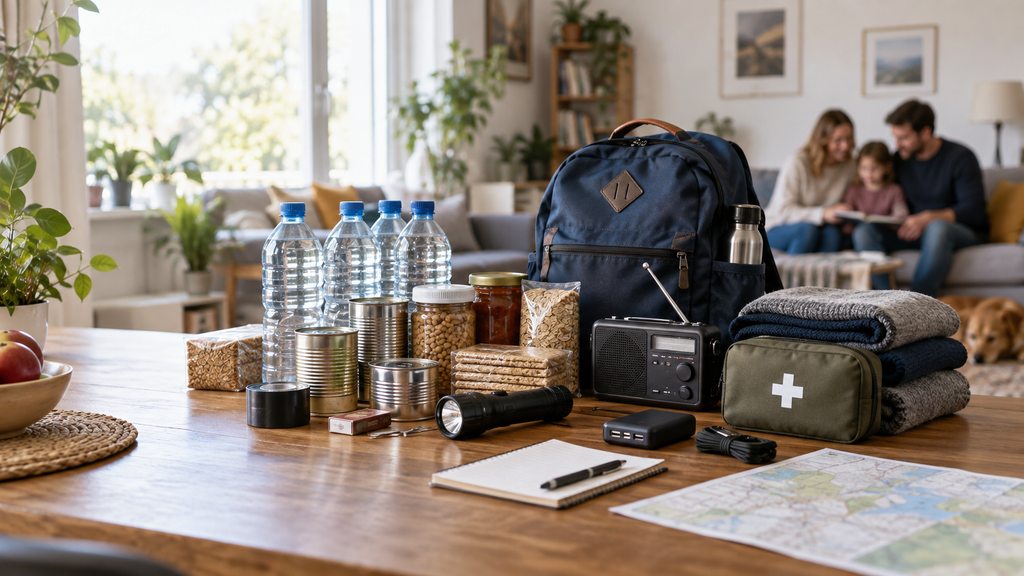
The 72-Hour Family Emergency Kit: A Practical Guide to Preparing Your Home
You do not need a bunker or a huge budget to become better prepared. A small, well-organised household kit can help your family stay safe, calm and independent during the first three days of an emergency.
Introduction
In these situations, the first objective is not to become completely self-sufficient. It is to create enough breathing room to make good decisions. A 72-hour kit gives your household basic water, food, light, information and comfort while you wait for services to return or follow official instructions.
The best kit is not the most expensive one. It is the one you can find quickly, understand clearly and maintain over time.
1. Start with your household, not with a shopping list
Before buying anything, write down who the kit must support:
- Adults and children
- Older people or anyone with reduced mobility
- Babies and young children
- People with allergies, diabetes or other medical needs
- Pets
- Anyone who relies on glasses, hearing devices, medication or powered equipment
Then identify your most likely local disruptions. A household in an apartment may need to think about lifts, water pressure and evacuation routes. A rural household may need more water, fuel planning and a way to receive information if travel is difficult. A family with young children needs comfort items and familiar food, not just technical equipment.
Do not try to prepare for every imaginable scenario at once. Begin with the common needs shared by many short-term emergencies.
2. Water: the first priority
Water is heavy, so storage requires a realistic plan. Keep drinking water in sealed, food-safe containers and follow the storage guidance on the packaging. Rotate it before its quality becomes questionable.
Your household should also consider water for preparing food, taking essential medication and basic hygiene. If you use water from an uncertain source, do not assume that boiling, filtering or chemical treatment are interchangeable. Each method has limits. Follow the instructions of your local authorities or use a certified product exactly as directed.
Practical actions:
- Store a reserve of bottled or otherwise safely stored drinking water.
- Keep a few smaller bottles that children can handle.
- Store water where it will not be exposed to heat, frost, sunlight or household chemicals.
- Keep a clean container available for collecting or transporting water.
- Include water needs in your evacuation plan as well as your stay-at-home plan.
3. Food for three days
Choose food that your family already eats and that can be prepared with little or no cooking. This makes the kit cheaper, easier to rotate and more acceptable to children.
Useful options may include:
- Canned vegetables, beans, fish or meat
- Crackers, oats, rice cakes and cereal
- Nut or seed products, if nobody has an allergy
- Dried fruit and long-life fruit purée
- Shelf-stable milk or a suitable alternative
- Ready-to-eat meals
- Baby food or special-diet products
- A manual can opener
Check expiry dates and use a “first in, first out” system. Put newer items at the back and use older items in normal meals. Keep a note of what requires cooking, refrigeration or extra water. During a power cut, avoid opening the refrigerator more than necessary and follow local food-safety guidance.
4. Light, power and information
When the lights go out, people often reach for their phone. That can work briefly, but a phone is also your map, contact list and source of information. Protect its battery.
Consider keeping:
- One flashlight per person where practical
- Spare batteries, if your devices use them
- A battery-powered or hand-crank radio
- Power banks and charging cables for the devices your family actually uses
- A small lamp or headlamp
- Matches or a lighter stored safely and away from children
- Paper copies of essential phone numbers and addresses
Test everything twice a year. A power bank that has been left empty for months is not an emergency plan. Store chargers with the devices they fit, and label unusual cables.
Never use outdoor fuel-burning equipment, charcoal barbecues or generators indoors or in an enclosed garage. Carbon monoxide can build up without an obvious smell. Follow the manufacturer’s instructions and local safety rules.
5. First aid and medication
A household first-aid kit should reflect real family needs. It may include dressings, plasters, antiseptic supplies, gloves, scissors, tweezers, a thermometer and commonly used over-the-counter products that your household can safely take.
Medication is personal and should be managed with advice from a doctor or pharmacist. Keep a current list of prescriptions, doses, allergies and important medical conditions. Do not rely only on memory or on a phone that may be out of power.
Also consider:
- Spare glasses or contact-lens supplies
- Hearing-aid batteries
- Essential mobility or care equipment
- Hygiene products
- Incontinence supplies
- Menstrual products
- Baby supplies
- A small supply of pet medication, where appropriate
Do not put all essential medication in a box that is difficult to access. The goal is to know where it is and to keep it within your normal medical safety requirements.
6. Warmth, hygiene and practical comfort
Short-term emergencies become harder when people are cold, wet, tired or unable to wash. Add items according to your home and climate:
- Warm blankets or sleeping bags
- A change of clothes and sturdy shoes
- Rain protection
- Soap, hand sanitiser, toothbrushes and toilet paper
- Bin bags and sealable bags
- Towels and wipes
- Dust masks for dirty environments
- A simple multi-tool and strong tape
- A basic fire extinguisher if your home does not already have one
Comfort is not a luxury. Familiar snacks, books, games, comfort objects and ear protection can help children and anxious adults remain calmer while information is incomplete.
7. Build a simple family communication plan
Every household should know what to do if people are separated. Write the plan down and review it together.
Include:
- A local meeting point near home
- A second meeting point outside the immediate area
- An out-of-area contact person, if useful for your family
- The school, childcare and workplace contact procedures
- Who collects children and who has permission to do so
- How to contact vulnerable relatives or neighbours
- Emergency numbers appropriate to your country
- A paper map of the local area
Use official alerts and emergency services for instructions. Social media can be useful, but it can also spread outdated or false information. Before sharing a warning, check its source, date and location.
8. Store the kit so that you can actually use it
Divide your supplies into three layers:
Everyday access: flashlight, shoes, medication, phone chargers and important documents.
Home reserve: water, food, hygiene items, blankets and cooking alternatives.
Grab-and-go bags: compact personal bags for each household member if you need to leave quickly.
Do not hide everything in one heavy box in a basement or attic. Keep the weight manageable, protect items from moisture, and make sure every adult knows the location. Children can have a small, safe personal bag with a comfort item and a water bottle.
9. Maintenance: the part most people forget
Preparedness is a habit, not a one-time purchase. Twice a year, check:
- Water and food condition
- Expiry dates
- Batteries and power banks
- Medication and prescriptions
- Clothing sizes and seasonal needs
- Pet food and supplies
- Important documents and contact numbers
- Whether everyone still remembers the plan
Choose a recurring date, such as the start of spring and autumn. Use older food in ordinary meals and replace only what you used. This keeps the system affordable.
10. A realistic first-week action plan
Today: write down household needs, locate flashlights, gather documents and identify the safest storage place.
This week: buy water, familiar food, a can opener, a first-aid kit, batteries or power banks and hygiene supplies.
This month: complete the communication plan, prepare grab-and-go bags and test the radio and lighting.
Every six months: review, rotate and practise a simple power-cut or evacuation drill.
Final checklist
Your household is off to a strong start when you have:
- Safe drinking water
- Three days of familiar food
- Light and a way to receive official information
- Phone charging options
- First aid and essential medication planning
- Warmth and hygiene supplies
- A written family communication plan
- A way to leave quickly if authorities instruct you to evacuate
- A maintenance date on the calendar
Preparedness is not about living in fear. It is about reducing avoidable stress so your family can think clearly when normal routines are interrupted.


